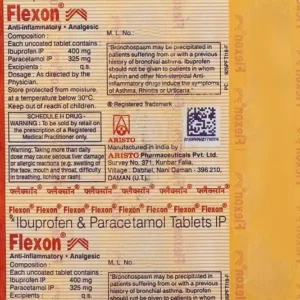
Combiflam Tablet is a prescription medicine for short-term relief of pain and fever. Each tablet pairs ibuprofen 400 mg, an NSAID, with paracetamol 325 mg, which eases pain and lowers temperature. It is used for headache, toothache, period pain, muscle and joint pain and minor injuries, and you take it with or after food.
Composition: Ibuprofen IP 400 mg + Paracetamol IP 325 mg
Marketer: Sanofi Consumer Healthcare India Limited
Prescription: Prescription required
Key facts about Combiflam Tablet
Here is Combiflam at a glance: two ingredients, one tablet, sold only on prescription.
| Key fact | Details |
|---|---|
| Composition | Ibuprofen IP 400 mg + Paracetamol IP 325 mg |
| Therapeutic class | Pain analgesics. Ibuprofen is an NSAID; paracetamol is an analgesic and antipyretic |
| Strength, form and pack | 400 mg + 325 mg · Tablet · 20 tablets |
| Marketer | Sanofi Consumer Healthcare India Limited |
| Prescription status | Prescription required |
| Storage | Store below 30°C |
About Combiflam Tablet
Combiflam is a combination painkiller. It puts two medicines in one tablet so they work together on pain, fever and inflammation.
Ibuprofen is an NSAID. Paracetamol is an analgesic and antipyretic. The tablet is marketed in India by Sanofi Consumer Healthcare India Limited.
Doctors prescribe it for short spells of pain or fever, because it is meant for short-term use only. For adults and adolescents aged 12 to 18, the label says not to use it for more than 3 days for fever or more than 4 days for pain, unless a physician recommends it.
Relief usually starts in about 30 minutes and lasts around 6 hours. Keep in mind that Combiflam eases symptoms. It does not treat the underlying cause of the illness. If pain or fever carries on for more than a few days, see your doctor.
Uses of Combiflam Tablet
Combiflam is used to treat pain and fever. The label and medical references list these conditions:
- Fever
- Headache and toothache
- Muscle pain and joint pain
- Pain during periods
- Pain from minor injuries
Benefits of Combiflam Tablet
The main benefit of Combiflam is that one tablet acts on pain, fever and swelling together.
Fever: It helps bring down a high temperature.
Headache, toothache and period pain: It relieves pain in these everyday conditions, with both ingredients acting on the pain at the same time.
Muscle pain, joint pain and minor injuries: It reduces pain as well as the swelling and inflammation that often come with sore muscles, painful joints and small injuries.
How Combiflam Tablet works
Combiflam works by blocking the release of chemical messengers in the body that cause fever, pain and inflammation (redness and swelling).
- Ibuprofen (400 mg): an NSAID that reduces the messengers behind pain, swelling and fever.
- Paracetamol (325 mg): an analgesic and antipyretic that eases pain and lowers fever.
Side effects of Combiflam Tablet
Most common side effects of Combiflam affect the stomach, such as nausea, heartburn and indigestion. Signs of stomach bleeding need medical help straight away.
Common side effects:
- Nausea
- Stomach pain
- Indigestion
- Heartburn
- Diarrhoea
- Dizziness
Get medical help right away if: you have severe stomach pain, vomit blood or pass black, tarry stools. Stomach bleeding, ulcers and perforation can happen at any time, with or without warning signs, and can be fatal. The risk is higher with bigger doses, a past ulcer and in older people. If you have severe stomach complaints, heartburn or belly pain, stop the tablet and see a doctor.
Seek help at once, too, for swelling of the face or tongue, a tight throat or trouble breathing. These are signs of a severe allergic reaction. Rare reactions such as Kounis syndrome, DRESS and fixed drug eruption have also been reported.
How to take Combiflam Tablet
Take Combiflam exactly as your doctor prescribes, with or after food, and swallow it whole.
- Take it with or after food. Do not take it on an empty stomach, as food reduces stomach upset and irritation.
- Swallow the tablet whole. Do not chew, crush or break it.
- Stick to the dose and duration your doctor advises, and avoid prolonged use without medical supervision.
- Do not take it with other medicines that contain paracetamol unless your doctor says so.
Label dose (always as prescribed by your doctor):
| Who | Dose on the label |
|---|---|
| Adults | One tablet three times a day. Extra doses only if needed, at least 6 hours apart. Not more than 3 tablets in any 24 hours |
| Adolescents aged 12 and above, weighing 40 kg or more | Starting dose of one tablet |
| Children | Only if a doctor advises; the dose depends on age and weight |
You can find the full dosing details in the Combiflam prescribing information from Sanofi.
Missed dose: Take it when you remember, unless the next dose is near. Never double up.
Overdose: Taking more than prescribed needs immediate medical attention. An acute overdose can cause liver (hepatocellular) failure, stomach bleeding, metabolic acidosis, brain effects (encephalopathy), coma and death, as well as pancreatitis, acute kidney failure and a drop in all blood cell counts (pancytopenia). Changes in lab tests can appear only 12 to 48 hours later. The risk of poisoning is higher in older people, small children, people with liver disorders, chronic alcohol use or malnutrition, and those taking enzyme-inducing medicines.
Safety advice for Combiflam Tablet
Combiflam does not suit everyone. Here is what the label says about alcohol, pregnancy, breastfeeding, driving, and kidney and liver health.
Alcohol — Unsafe. Avoid alcohol while you are taking Combiflam. Excessive alcohol may raise the risk of stomach bleeding and liver-related side effects.
Pregnancy — Consult your doctor. Combiflam must not be used in the third trimester. NSAID use from about 13 weeks of pregnancy or later can cause low amniotic fluid (oligohydramnios) and kidney problems in the newborn. It is not recommended if you are trying to conceive.
Breastfeeding — Safe if prescribed. Talk to your doctor before using it while breastfeeding.
Driving — Caution. In isolated cases, it may affect your ability to drive or operate machinery. Dizziness is a known side effect, so hold off on driving if you feel unsteady.
Kidney — Unsafe in severe kidney failure. Combiflam must not be used in severe renal failure. If you have any kidney problem, tell your doctor before you take it.
Liver — Unsafe in severe liver failure. It must not be used in severe hepatic failure, and caution is needed with other liver disorders.
Who should not take Combiflam Tablet
You should not take Combiflam if you are allergic to its ingredients or other NSAIDs, or have stomach ulcers or bleeding, severe liver or kidney failure, or a clotting disorder. Some heart and pregnancy conditions also rule it out.
Allergy to painkillers: Avoid it if you are allergic to ibuprofen, paracetamol, aspirin, other NSAIDs or any ingredient in the tablet. If painkillers have ever set off your asthma, tell your doctor first.
Stomach ulcers or bleeding: It is not for people with a past or current stomach ulcer, perforation or bleeding, including bleeding from earlier NSAID use. Do not use it for stomach pain without a doctor’s advice, as it may worsen gastritis or ulcers.
Liver or kidney disease: Severe liver or kidney failure rules it out, and other liver disorders need caution. In people who are dehydrated or already unwell, repeated use may affect kidney function.
Bleeding and blood disorders: It is not suitable if you have a clotting problem or a blood-formation disorder that has not been explained.
High blood pressure or heart failure: Avoid it with uncontrolled high blood pressure or heart failure, unless your doctor advises otherwise. In people who are dehydrated or have other health problems, repeated use may raise blood pressure.
Pregnancy and planning a baby: It must not be used in the last three months of pregnancy and is not recommended while trying to conceive.
Long or heavy use: Combiflam is meant for short-term use. Long-term or excessive use may raise the risk of stomach bleeding and kidney problems.
Interactions with Combiflam Tablet
The main interactions to know are other paracetamol products, other NSAIDs, blood thinners and enzyme-inducing medicines. Tell your doctor about everything you take.
| Medicine | What can happen | What to do |
|---|---|---|
| Other paracetamol products | Combiflam already contains paracetamol, so you could take too much | Do not combine without consulting your doctor |
| Other NSAIDs (ibuprofen, diclofenac, naproxen) | Doubling up on the same type of medicine | Avoid unless your doctor advises it |
| Blood thinners such as warfarin | Warfarin raises the risk of bleeding; blood thinners may change the dose or whether the tablet suits you | Tell your doctor before starting |
| Enzyme-inducing medicines | Higher risk of poisoning | Tell your doctor before starting |
FAQs about Combiflam Tablet
What is the price of Combiflam tablet?
Combiflam Tablet comes in strips of 20 tablets. Prices vary by pack and pharmacy, so check the current MRP printed on the pack when you buy. Because it is a prescription medicine, you will need a valid prescription from your doctor to get it.
What is the usual dose of Combiflam?
The label dose of Combiflam for adults is one tablet three times a day, at least 6 hours apart, with no more than 3 tablets in 24 hours. Adolescents aged 12 and above who weigh 40 kg or more start with one tablet. Children should get it only if a doctor advises.
Combiflam vs paracetamol: what is the difference?
Combiflam contains two medicines, ibuprofen 400 mg and paracetamol 325 mg, while a plain paracetamol tablet has only one. The ibuprofen is an NSAID, so it also acts on swelling and inflammation, but it brings NSAID cautions for the stomach, kidneys and heart. Your doctor decides which one suits your condition.
Is Combiflam tablet the same as Tab Combiflam?
Yes. Combiflam tablet and Tab Combiflam are two names for the same product. ‘Tab’ is simply the short form of tablet you’ll often see on prescriptions. Both refer to Combiflam with ibuprofen 400 mg and paracetamol 325 mg, marketed in India by Sanofi Consumer Healthcare India Limited.
Combiflam tablet mg: what is the exact composition?
Each Combiflam tablet contains Ibuprofen IP 400 mg and Paracetamol IP 325 mg. Ibuprofen is an NSAID, and paracetamol is an analgesic and antipyretic, so together they work on pain, fever and inflammation. It comes in a pack of 20 tablets and is marketed by Sanofi Consumer Healthcare India Limited.
Can I take Combiflam khali pet (on an empty stomach)?
No. Combiflam should not be taken khali pet. Take it with or after food, because it can irritate the stomach and cause nausea, heartburn or indigestion. Swallow the tablet whole, without chewing, crushing or breaking it, and keep to the dose and timing your doctor has given you.
What should I do if I miss a dose of Combiflam?
Take the missed dose when you remember, unless your next dose is due soon. In that case, leave out the missed one and carry on as usual. Never take two doses together to make up for it, and keep at least 6 hours between doses, as the label advises.
What happens if I take too many Combiflam tablets?
Get medical help straight away. Too much Combiflam can cause liver failure, stomach bleeding, kidney failure and other serious harm, and can be fatal. Changes on blood tests may show only 12 to 48 hours later, so don’t wait for symptoms. The risk is higher in older people, small children and people with liver disorders.
How should I store Combiflam in Indian summers?
Store Combiflam below 30°C. In hot months, keep the strip away from warm spots such as a sunny windowsill or a parked car, where the temperature can climb well above that limit. A cupboard away from direct sunlight is an easy everyday choice for keeping the tablets within the label range.
References
About this page
Written by: Mr. Neeraj Kumar, Bachelor’s Degree
Updated on: 2 Nov 2026
Product information: Product details come from the pack label, the manufacturer and published regulatory records, and are checked against the sources listed on this page before publishing. Read our editorial policy.
Disclaimer: Product information is provided for reference and does not replace advice from your doctor or pharmacist. Prescription medicines are supplied only against a valid prescription. Do not start, stop or change any medicine without medical advice. Prices and availability can change.
Marketer details: Marketed by Sanofi Consumer Healthcare India Limited.