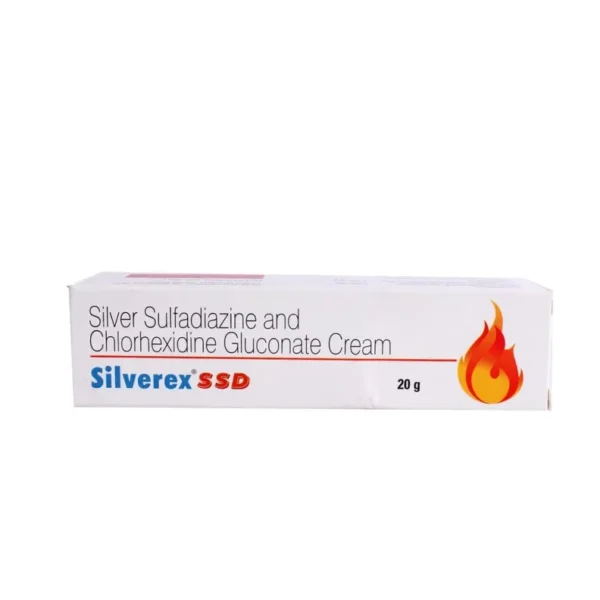
Silverex cream is a prescription topical cream that combines silver sulfadiazine with chlorhexidine gluconate 0.2% w/w. It is used on burn wounds to prevent skin infection. It is also used to protect skin graft sites and to care for chronic ulcers such as pressure sores and diabetic leg ulcers. Silverex SSD from Sun Pharma contains 0.5% silver sulfadiazine.
Key facts about Silverex Cream
There are two versions of this cream, and they differ in silver sulfadiazine strength. Here is what you need to know at a glance.
| Key fact | Details |
|---|---|
| Composition | Silverex SSD cream (Sun Pharma): chlorhexidine gluconate 0.2% w/w + silver sulfadiazine 0.5% w/w; Silverex cream (Ranbaxy-linked): chlorhexidine gluconate 0.2% w/w + silver sulfadiazine 1% w/w |
| Form and pack | Topical cream · Silverex SSD is listed in 10 g, 20 g and 240 g packs |
| Listed MRP | 10 g: Rs 144.0 · 20 g: Rs 195 · 240 g: Rs 754.69 |
| Manufacturer | Silverex SSD: Sun Pharmaceutical Industries Ltd, Plot no 107/108, Namli block, Ranipool, East Sikkim 737135 |
| Prescription status | Listed as a prescription topical cream |
| Storage | Store at room temperature, away from excessive heat, moisture and direct sunlight; keep out of reach of children |
About Silverex Cream
Silverex cream puts two antimicrobial ingredients into one cream that you apply on the skin. In Silverex SSD, these are silver sulfadiazine 0.5% w/w and chlorhexidine gluconate 0.2% w/w, made by Sun Pharmaceutical Industries Ltd in East Sikkim.
An older version with silver sulfadiazine 1% w/w was listed as made by Ranbaxy Laboratories Ltd (Consumer Healthcare). Check your pack so you know which strength you have.
The cream is part of wound care. It is usually applied in a thin layer and covered with a dressing, which is changed before each application. Use continues until the wound heals well, or until a burn site is ready for grafting. Avoid using it for longer than your doctor advises.
Uses of Silverex Cream
Silverex cream is used to treat burn wounds and to prevent skin infections. The uses listed for each version are below.
Silverex SSD (0.5%):
- Burn wounds, including bacterial growth in second- and third-degree burns
- Prevention of skin infections
- Protection of skin grafts
- Chronic ulcers, such as pressure wounds and diabetic leg ulcers
Older 1% version:
- Minor burns, scalds, scratches, cuts, abrasions, sunburn blisters and infected cracked skin
- Short-term treatment of infection in leg ulcers and pressure sores
- Prevention of infection in skin graft donor sites and extensive abrasions
Benefits of Silverex Cream
The main benefit of Silverex cream is that it keeps bacteria from multiplying on a wound while it heals. This matters most on burns, graft sites and long-standing ulcers.
Help for second- and third-degree burns: It helps prevent and treat bacterial growth on deeper burns. The silver sulfadiazine blocks the folic acid that bacteria need to multiply.
Care of skin graft areas: It is used to protect skin grafts from bacterial growth.
Pressure sores and diabetic leg ulcers: It is also used on chronic ulcers, such as pressure wounds or diabetic leg ulcers, to keep bacteria in check on the wound.
How Silverex Cream works
Silverex cream works by stopping bacteria from multiplying on the wound. Silver sulfadiazine blocks the bacteria from making folic acid, which they need to grow and divide. Without it, they cannot multiply and spread on the broken skin.
Side effects of Silverex Cream
Silverex cream most often causes mild reactions where you apply it, and these are often temporary. A serious allergic reaction needs urgent help.
Common side effects:
- Mild burning at the application site
- Skin irritation
- Itching
- Redness
- Grey discolouration of the skin
- Grey or silver stains on clothes and other fabrics
Get medical help right away if: you notice signs of an allergic reaction, such as a severe rash, difficulty breathing or swelling of the face.
How to take Silverex Cream
Apply Silverex cream exactly as your doctor prescribes, once or twice a day. Keep the layer thin and the area covered.
- Apply to the affected areas one or two times a day, as directed by a healthcare professional. One Silverex SSD 10 g label says to apply a thin film twice daily.
- Use sterile gloves and spread a thin layer, about 1/16 inch (1.6 mm), over the affected area.
- Cover with a dressing. Change the dressing before each application, and avoid applying more often than advised.
- Continue until the wound heals well, or until the burn site is ready for grafting.
Missed dose: Apply it as soon as you remember. If the next application is nearly due, skip the missed one. Do not apply a double dose.
Overdose: Using too much is unlikely to cause severe symptoms unless large amounts are applied for a long time. Swallowing the cream may cause harm and needs immediate medical help.
Safety advice for Silverex Cream
Silverex cream is used on the skin, but some groups need extra caution. Here is the advice for each situation.
- Alcohol, consult your doctor: How Silverex cream interacts with alcohol is unknown, so ask your doctor.
- Pregnancy, caution: Use Silverex cream in pregnancy only if your doctor advises it. Avoid it in the late stages of pregnancy.
- Breastfeeding, caution: Use with caution if you are breastfeeding.
- Driving, safe: It is applied externally and is less likely to affect your ability to drive.
- Kidney, caution: Use it with caution in kidney disease. The medicine can be absorbed into the blood over large wound areas, which raises the risk of severe side effects.
- Liver, caution: Caution is advised if you have liver problems.
Who should not take Silverex Cream
Silverex cream is not for everyone. Avoid it, or use it only with close medical advice, in these situations.
Allergy to sulfa drugs or chlorhexidine: Do not use it if you are allergic to silver sulfadiazine, sulfonamides, chlorhexidine or any other ingredient in the cream.
Premature babies and newborns: Do not use it on premature babies or on newborns in their first few months.
G6PD deficiency: People with G6PD deficiency have a higher risk of haemolysis with this cream.
Large, bleeding or internal wounds: It is not recommended on large body areas, and it should not be applied to bleeding or internal wounds. Avoid prolonged use. If a very large area needs treatment, talk to your doctor about checking your blood counts and kidney function.
Eyes, nose, mouth and body cavities: The cream is not for use inside body cavities. If it gets into your eyes, nose, mouth or vagina, rinse well with water.
Kidney or liver problems: Use it with caution, as explained in the safety advice above.
Pregnancy and breastfeeding: Use it with caution, and avoid it in the late stages of pregnancy.
Interactions with Silverex Cream
Silverex cream can interact with a few wound products and medicines. Tell your doctor about everything you use.
| Medicine | What can happen | What to do |
|---|---|---|
| Collagenase and other enzyme wound cleaners (topical enzymatic debriding agents) | The cream may inactivate them | Do not use the two on the same wound |
| Sulfonamide medicines taken by mouth | Higher risk of side effects throughout the body | Tell your doctor about any sulfa medicines you take |
| Prilocaine | Risk of methemoglobinemia | Use together is not recommended |
FAQs about Silverex Cream
What is the difference between Silverex SSD and the older Silverex cream?
The difference is the strength of silver sulfadiazine. Silverex SSD from Sun Pharma has 0.5% w/w, while the older version listed under Ranbaxy had 1% w/w. Both contain chlorhexidine gluconate 0.2% w/w. Look at the composition printed on your pack to see which one you have.
Silverex cream din mein kitni baar lagana chahiye?
It is usually applied once or twice a day, as your doctor directs. One Silverex SSD label says to apply a thin film twice daily to the affected area. Cover it with a dressing, change the dressing before each application, and do not apply it more often than advised.
What should I do if I forget to apply Silverex cream?
Apply it as soon as you remember. If your next application is nearly due, skip the missed one and carry on with your usual schedule. Do not apply a double dose.
How do I store Silverex cream in hot and humid weather?
Keep the tube at room temperature, away from excessive heat, moisture and direct sunlight. In Indian summers and the monsoon, choose a cool, dry shelf rather than a warm or damp spot. Always keep it out of reach of children, and close the cap after each use.
What happens if Silverex cream is swallowed or used too much?
Using too much on the skin is unlikely to cause severe symptoms, unless large amounts are applied for a long time. Swallowing the cream is different. It may cause harm and needs medical help right away, so keep the tube where children cannot reach it.
Which pack sizes does Silverex SSD cream come in?
Silverex SSD is listed in 10 g, 20 g and 240 g packs. The listed MRP is Rs 144.0 for 10 g, Rs 195 for 20 g and Rs 754.69 for 240 g. The pack your doctor suggests may depend on the size of the area being treated. Prices can change.
References
About this page
Written by: Mr. Neeraj Kumar, Bachelor’s Degree
Updated on: 4 Nov 2026
Product information: Product details come from the pack label, the manufacturer and published regulatory records, and are checked against the sources listed on this page before publishing. Read our editorial policy.
Disclaimer: Product information is provided for reference and does not replace advice from your doctor or pharmacist. Prescription medicines are supplied only against a valid prescription. Do not start, stop or change any medicine without medical advice. Prices and availability can change.
Marketer details: Manufactured by Silverex SSD: Sun Pharmaceutical Industries Ltd, Plot no 107/108, Namli block, Ranipool, East Sikkim 737135.